Navigating the Future: A Guide to the Latest Robotic Mower Technology
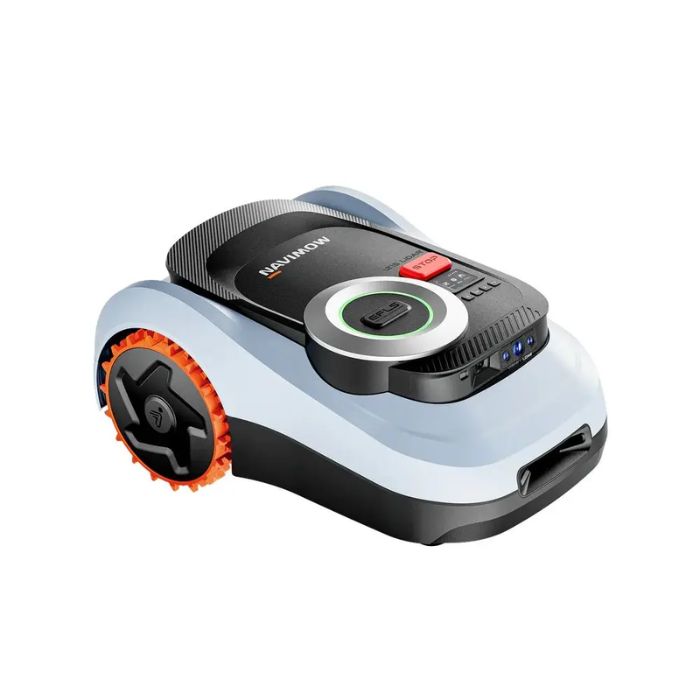
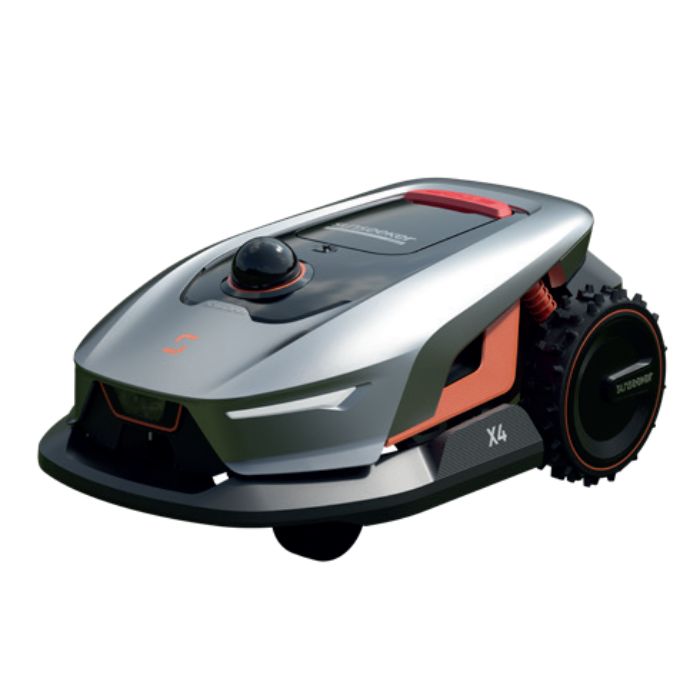
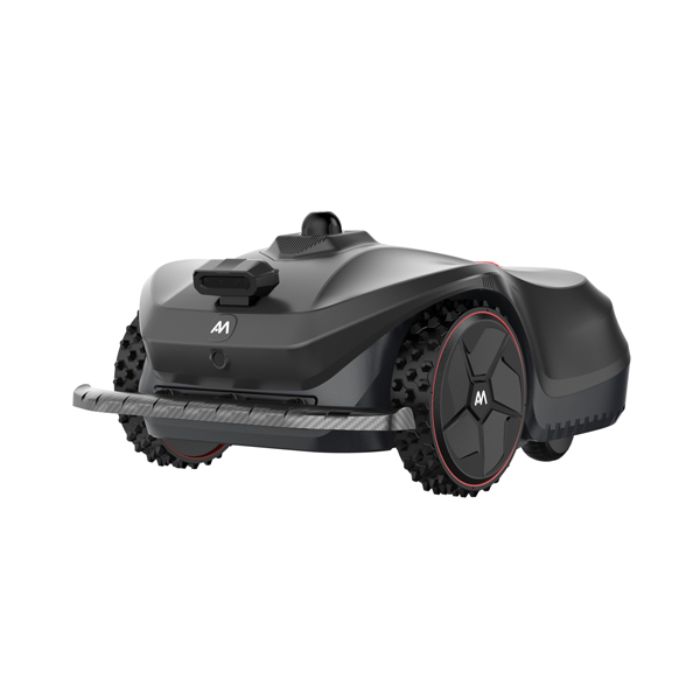
The professional landscaping and residential lawn care industries have reached a technological turning point. The transition from labor-intensive mowing to boundary wired machines to "wire-free" or "virtual boundary" navigation has occured, which is now the standard for modern automation. At WGM Ltd, we specialize in the leading brands driving this revolution—Sunseeker, Segway, Husqvarna, STORM, Kress and EGO.
Choosing the right robotic mower is no longer just about the size of your lawn; it is about understanding the navigation technology that best suits your environment. Whether you have a wide-open estate, a heavily shaded garden, or a complex landscape with narrow passages, the choice between RTK, LiDAR, and Visual SLAM (V-SLAM) will define your experience.
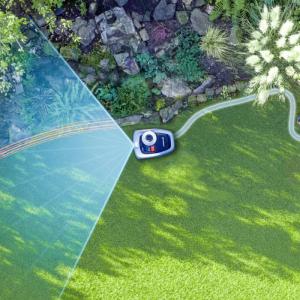
1. RTK (Real-Time Kinematic): Satellite-Based Precision
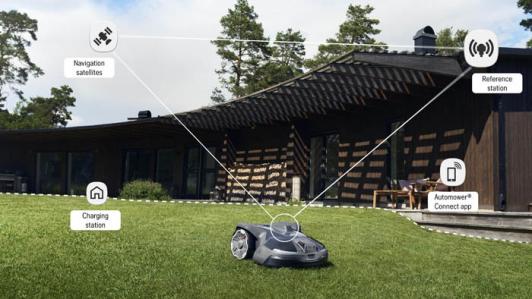
Real-Time Kinematic (RTK) positioning is a high-precision satellite technology that enhances standard GPS signals. While traditional GPS might be accurate within a few meters, RTK uses a stationary reference point to provide centimeter-level precision (typically 1 to 2 cm).
How the WGM Brands Use RTK:
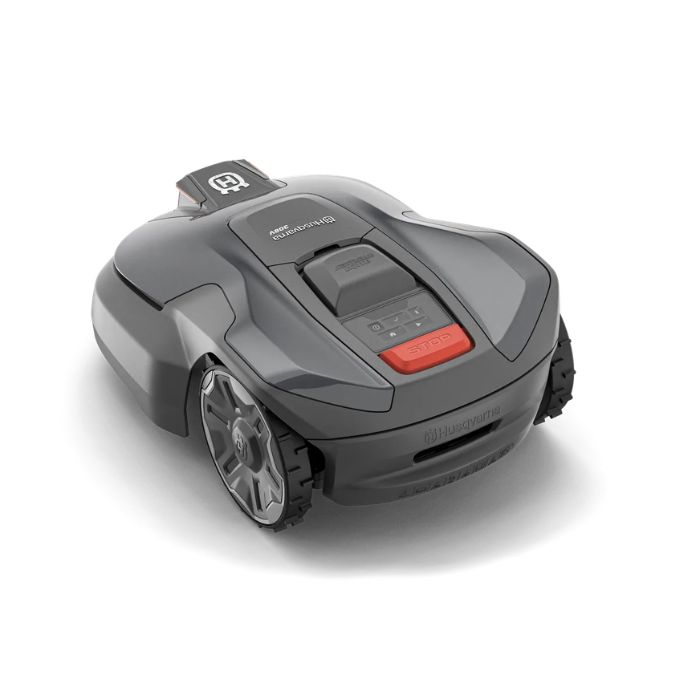
- Husqvarna: Utilizes its proprietary EPOS™ (Exact Positioning Operating System). This system relies on a clear line of sight to satellites and a local reference station to create precise virtual boundaries without any physical wires.
- Kress: Employs a unique Network RTK (RTKⁿ) approach. Instead of requiring a private antenna on your roof, Kress mowers connect to a vast professional network of reference stations via 4G, providing high-precision correction data across the entire property without additional external hardware.
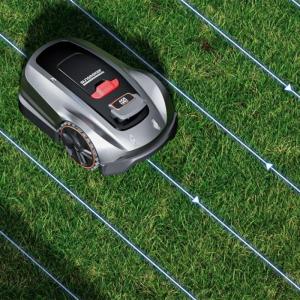
- Segway: Integrates RTK as the primary navigation source for its wire-free range, allowing for systematic, straight-line mowing patterns that are highly efficient for large areas.
Best For:
Large, open lawns with minimal tree cover or tall buildings. It is the ideal technology for users who want perfectly straight mowing lines and absolute global positioning.
2. LiDAR: Laser-Based Environmental Mapping
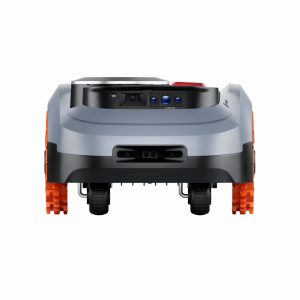
LiDAR (Light Detection and Ranging) is an "active" sensing technology. The mower emits thousands of laser pulses per second and measures the "Time of Flight" (how long it takes for the light to bounce back) to build a real-time 3D map of the surroundings.
How the WGM Brands Use LiDAR:
- Storm: These mowers are defined by their LDI (LiDAR Detection & Intelligence) technology. Unlike many others, Storm is designed to be entirely self-reliant. It does not require RTK base stations, 4G signals, or satellite views. Instead, it "sees" the environment using a 3D laser turret, making it highly effective in areas where GPS signals fail.
- Segway: Some of our Segway solutions utilize solid-state LiDAR sensors. These are often used in a "Sensor Fusion" capacity, providing the mower with the "eyes" to navigate precisely near structures or under dense tree canopies where satellite signals might be blocked.
Best For:
Complex or heavily shaded yards. Because LiDAR provides its own light source, it works consistently in deep shade, under trees, and even in total darkness.
3. Visual SLAM and AI Vision: Camera-Based Perception
Visual Simultaneous Localization and Mapping (V-SLAM) and AI Vision use high-resolution cameras to interpret the environment. While RTK identifies where a mower is, Vision technology allows the mower to understand what it is seeing.
How the WGM Brands Use Vision:
- Sunseeker: Features the AONavi system, which combines RTK with V-SLAM. The onboard AI uses cameras to identify lawn edges and transitions, allowing for extremely precise navigation even in narrow passages and complex layouts.
- Segway: Employs VisionFence™ technology. This AI-powered camera acts as a safety and navigation layer, allowing the mower to detect and classify obstacles like pets, toys, or garden hoses, which LiDAR or RTK alone might miss.
- Kress: New generations of Kress technology incorporate EyePilot®, using V-SLAM to identify visual landmarks. This allows the mower to navigate effectively in "GPS-dead zones" and mow extremely close to edges by visually recognizing the boundary.
Best For:
Dynamic residential yards with children, pets, or frequently moved objects. AI Vision provides the highest level of obstacle intelligence and semantic understanding of the yard.
4. Comparing the Technologies: At a Glance
|
Feature |
RTK (Satellite) |
LiDAR (Laser) |
AI Vision / V-SLAM (Camera) |
|
Brands at WGM |
Husqvarna, Segway, Kress |
Storm, Segway |
Sunseeker, Kress, Segway |
|
Environment |
Best for large, open fields. |
Best for shaded, complex yards. |
Best for dynamic residential yards. |
|
Infrastructure |
Needs base station or 4G. |
Self-contained; no signal needed. |
Self-contained; needs light. |
|
Obstacle Detection |
Relies on virtual boundaries. |
Sees shapes and distances. |
Identifies specific objects (pets/toys). |
|
Precision |
Centimeter-level (Global). |
High (Local spatial mapping). |
Adaptive (Contextual). |
Summary: Finding Your Perfect Match
The modern "Zero-Wire" standard has evolved so that no single technology is forced to do everything. Many of the brands we carry now use Sensor Fusion, where the mower might use RTK for straight-line efficiency but switch to LiDAR or Vision the moment it enters a shaded area or encounters an obstacle.
- For large estates and sports fields: Look to the satellite-based precision of Husqvarna and Kress.
- For heavily shaded gardens or rural areas with poor signals: The self-reliant LDI technology of Storm offers a unique, signal-free solution.
- For busy family gardens: The intelligent vision systems of Sunseeker and Segway provide the best-in-class obstacle avoidance you need.
At WGM Ltd, we are here to help you match your property’s unique challenges with the right technological stack. Contact our team today for a consultation.