Best Practises For Safe Chainsaw Use
It's essential to emphasize that operating a chainsaw safely isn't just about efficiency - it’s about prevention, protection, and preparedness. A safe workspace hinges on four core pillars: PPE, Chainsaw Maintenance, Team Work & Fuel Management.

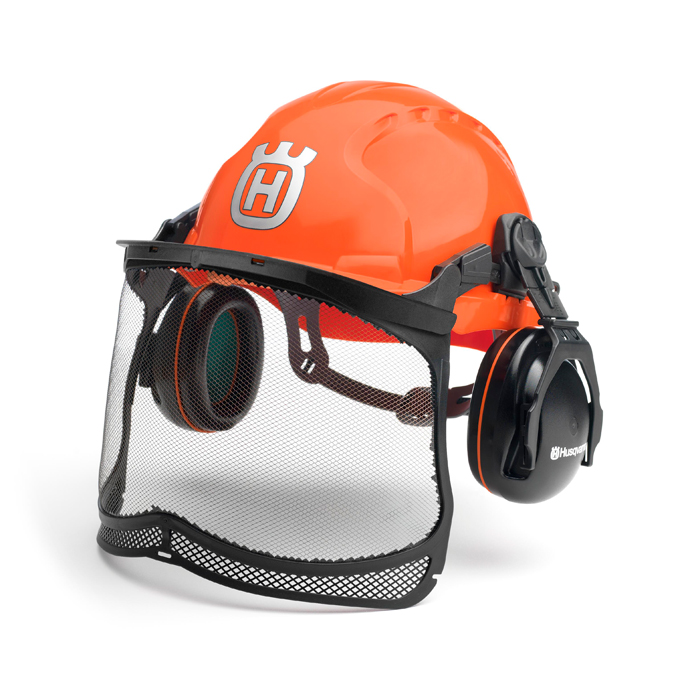
PPE - Quality PPE reduces the risk of severe injury and is often legally required.
Wearing and maintaining appropriate PPE (helmet, eye/face protection, ear defenders, cut‑resistant gloves, chainsaw trousers, and chainsaw boots) isn’t just a suggestion - it’s your first line of defence. Wearing a helmet is there to guard you against falling branches, Visors/glasses for flying debris, Ear defenders to reduce loud engine noise, Gloves for a secure grip, and Chainsaw trousers & boots with steel toe caps to help protect you against injury.
For more information on PPE click HERE.
To shop our wide range of PPE click HERE.
Chainsaw Maintenance - Regular up-keep reduces the chance of malfunction.
Regular Chainsaw maintenance is vital for safety, performance, and the longevity of your tool: a sharp, properly tensioned chain reduces operator fatigue and the risk of dangerous kickback, while keeping safety components like the chain brake, and controls in good order. Regular cleaning and replacement of parts—air filter, spark plug, guide bar—and ensuring proper lubrication improve cutting efficiency, fuel economy, and reduce emissions. Neglect leads to degraded performance, higher repair costs, and shortens the tool’s lifespan. In short, maintaining your chainsaw keeps it safe, reliable, and powerful, while saving you time and money.
Team Work - Avoid using dangerous tool alone.
Working with a partner instead of working alone when using a chainsaw significantly boosts safety—and can be a lifesaver. Safety authorities like the UK’s Health and Safety Executive emphasise that lone working with chainsaws should be avoided wherever possible. A partner acts as an extra set of eyes, helping maintain safe zones around the saw, spot hazards, and avoid anyone or anything being in the operator’s blind spots - all essential for preventing accidents. Chainsaw work is safer, more controlled, and far more resilient to emergencies when done with another trained person by your side.
Fuel - Ensure you have the right amount of fuel (or battery charge) to finish the job.
Ensuring your chainsaw has the right amount of fuel or battery charge before you start the job is critical for safety, efficiency, and equipment longevity: a low fuel level or dead battery not only risks the saw stalling mid-cut but potentially causing dangerous kickback or trapping the chain.


For petrol models, consistently using the correct fuel‑oil mix and avoiding spills or over‑filling prevents engine damage and environmental hazards.
For battery chainsaws, monitoring charge levels, charging before each use, and inspecting battery health maintains runtime, avoids unexpected shutdowns, and prevents battery degradation or failure.
Contact Winchester Garden Machinery for expert advice and guidance
Winchester Garden Machinery is committed to providing expert advice and guidance to all chainsaw users. With decades of experience, our team is ready to assist you in selecting and maintaining your chainsaw. Do not hesitate to contact us for further product details and professional support.